deutsch
Program | Impressions
Impressions of the annual meeting 2025
Prof. Henrike Heise, Dr. Philipp Neudecker and the industrious members of the Institute of Physical Biology had invited the network to the annual meeting on the campus of Heinrich Heine University Düsseldorf.
Some impressions from the bio-N3MR annual meeting 2025 in Düsseldorf:
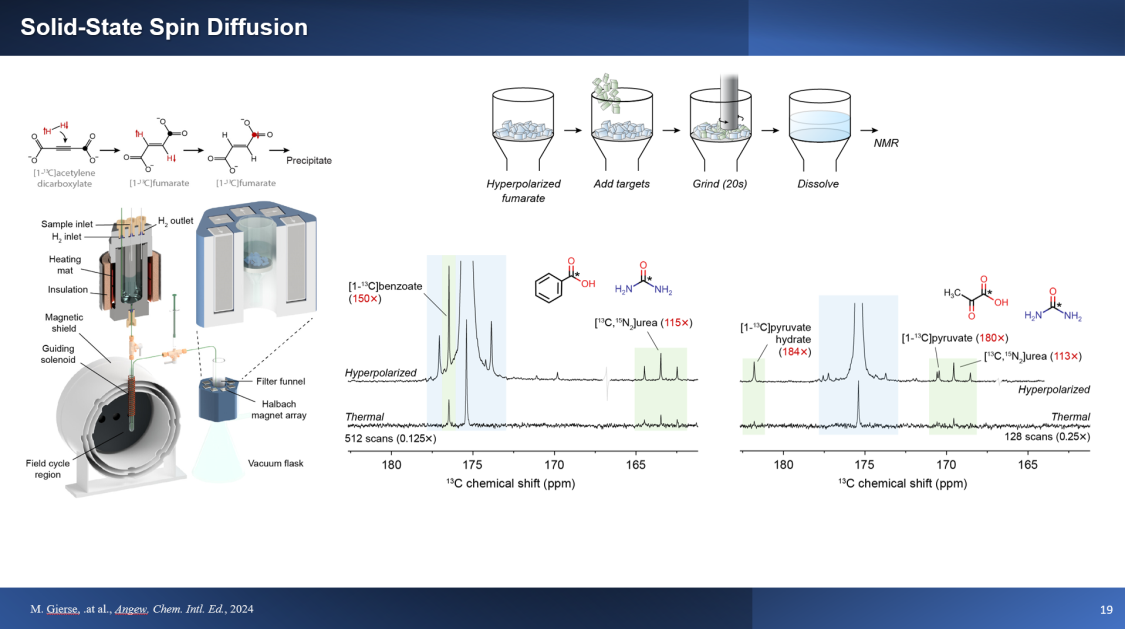
Dr. James Eills, who recently joined FZ Jülich as a junior group leader, started off the scientific program with an introduction into the potential of using para-hydrogen in order to boost the sensitivity of NMR spectra.
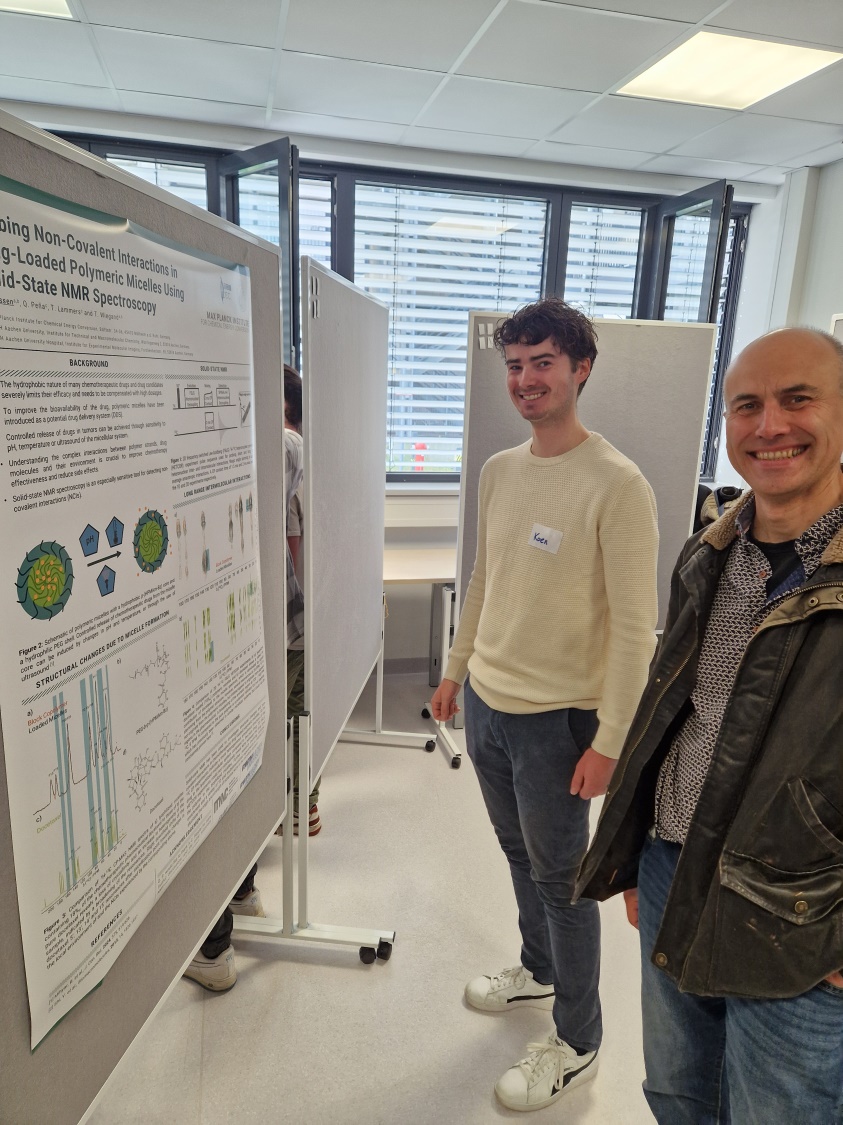
As an external guest speaker we were delighted to welcome Prof. Andres Ramos (right) from University College London, who shared his comprehensive insight into m6A methylation of RNAs obtained from a combination of NMR structural biology and experimental cell biology and who engaged with the network members to discuss the scientific results presented during the poster session in the afternoon.
![Hannah Busch from RWTH Aachen reported the characterization of the remarkable properties of paramagnetic Europium(III) ions in a calix[4]aren complex by solid-state NMR spectroscopy.](https://www.bionmr-netzwerk-nrw.de/lw_resource/datapool/_items/item_254/Bild03.jpg "Hannah Busch from RWTH Aachen reported the characterization of the remarkable properties of paramagnetic Europium(III) ions in a calix[4]aren complex by solid-state NMR spectroscopy.")
Hannah Busch from RWTH Aachen reported the characterization of the remarkable properties of paramagnetic Europium(III) ions in a calix[4]aren complex by solid-state NMR spectroscopy.

Melinda Jaspert, a doctoral student at HHU Düsseldorf and FZ Jülich, presented various partially or fully denatured states of the PI3K SH3 domain, a model system for studying the formation of amyloid fibrils.

In recognition of his outstanding contributions during his many years of service as the speaker of the bio-N3MR network and on behalf of all research groups, Prof. Henrike Heise presented a basket of stereotypical delicacies from the various regions of North Rhine-Westphalia and the best wishes for his well-deserved retirement to Dr. Bernd König.
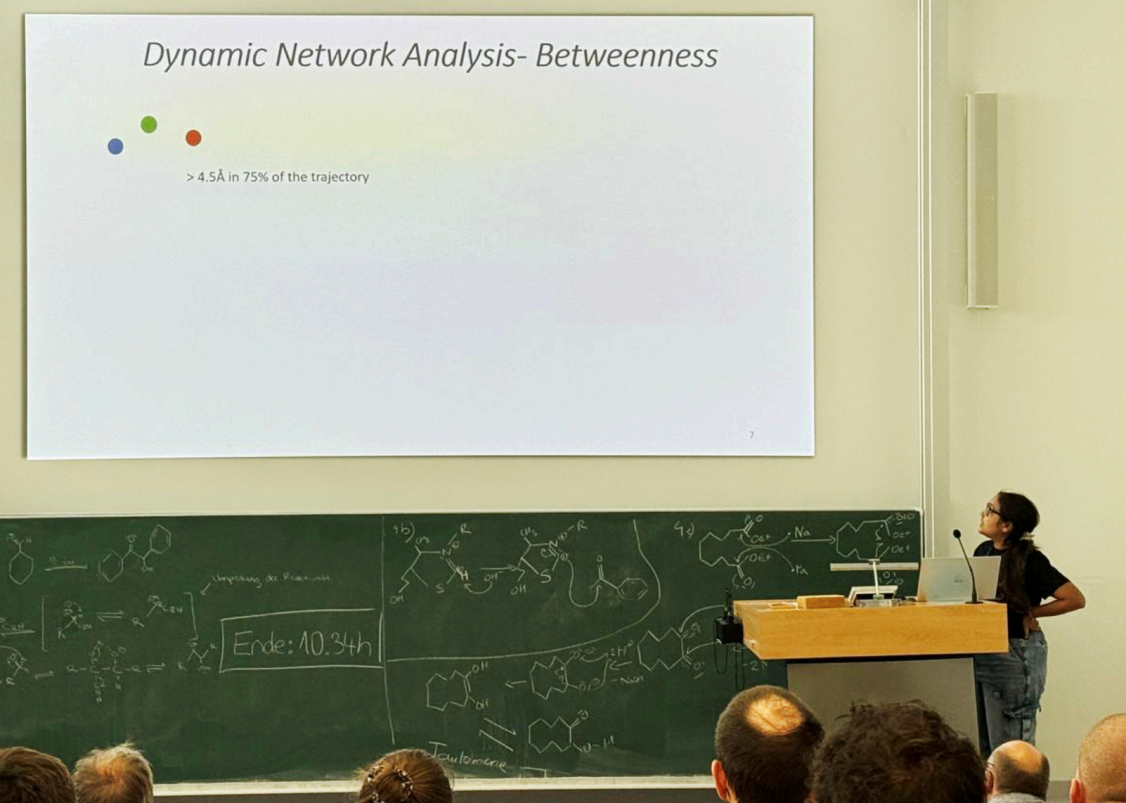
Suchandra Roy Acharyya from TU Dortmund outlined how she uses molecular dynamics simulations in combination with NMR spectroscopic data to elucidate the allosteric dynamics of the MAP kinase p38-alpha, which plays a central role in signal transduction in the cell in health and disease.

Dr. Christine Beuck from University Duisburg-Essen presented the structural characterization of the lipid transfer protein Sterol Carrier Protein 2 (SCP2) from archaea, the cell membrane composition of which differs significantly compared to bacteria and eukaryotes.
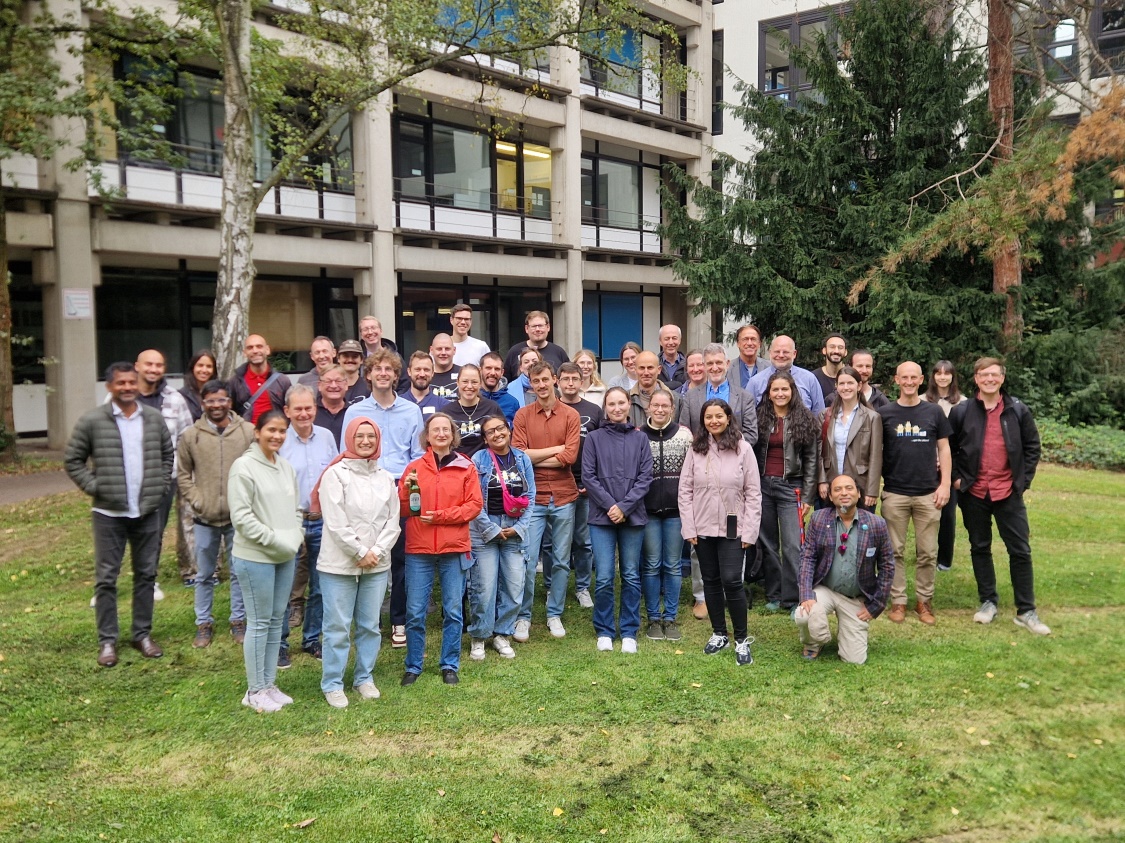
After many stimulating oral and poster presentations the members of the bio-N3MR network had the opportunity to continue their scientific discussions and socialize at the barbecue.